Whose fates will June 3rd seal?
Who will lead the reinvention of the conservative party?
One sentence grabbed my attention as I skimmed the official pamphlets for the June 3rd local election that arrived in my mailbox: “Party does not count; vote for the right person!” (You can easily guess to which party this candidate belongs.)
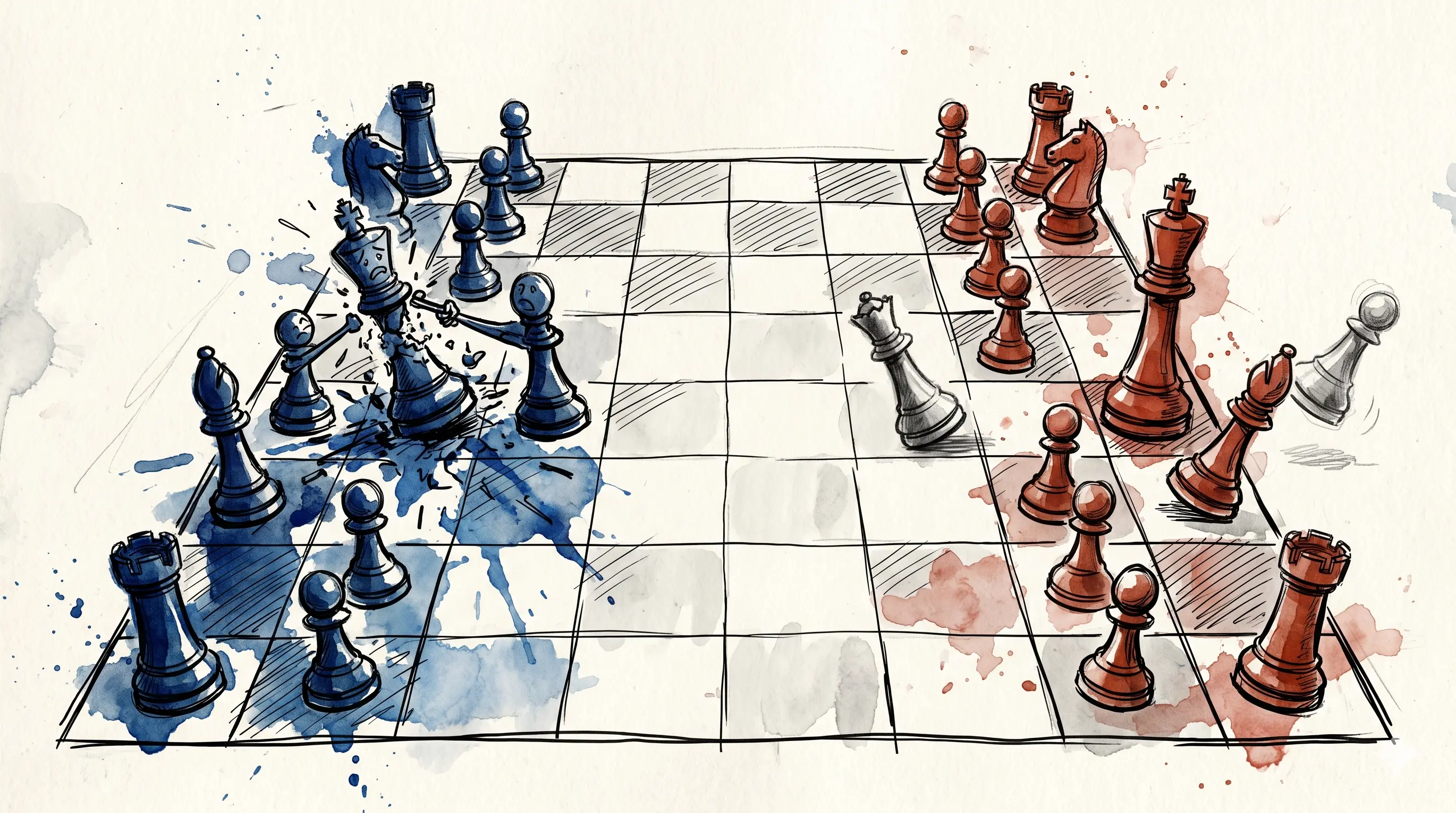
It was a rare admission of weakness from a conservative contender. The People Power Party (PPP) is facing defeat, and frankly, a crushing one would be best—conservatives need to die before they can rise again. The PPP leadership has failed—or perhaps simply refused—to purge the party of the remnants of the disgraced Yoon Suk-yeol, and proved itself entirely incompetent in the run-up to the election.
Why not just set up a new conservative party, you might ask. It is simply not feasible. A powerful presidential system intrinsically favors two-party competition. Furthermore, decades of “political reforms,” particularly the way the government allocates party subsidies, have cemented this duopoly. Anyone who wants to make a difference in Korean politics must eventually join either the Minjoo party or the PPP (though the latter will likely invent a new name soon, as it usually does when backed into a political cul-de-sac).
Han Dong-hoon will emerge as the strongest contender for the next conservative leadership if he proves himself in the election. After being expelled by the current leadership, the Yoon administration’s former justice minister has been running as an independent for a vacant Assembly seat in Busan. Competing against his former party’s candidate and a former AI advisor to President Lee Jae-myung makes this an uphill battle, but Han has shown promising poll results.
Long-time readers of this newsletter may recall my deep skepticism regarding Mr Han’s political aptitude. However, his campaign—his first time running for elected public office—has forced me to revise my view. He genuinely seems to enjoy meeting voters and excels at grassroots engagement, particularly with teenagers.
Outcompeting both Minjoo and PPP candidates as a third-party outsider is a notable feat. There is only one politician who managed exactly that two years ago: Lee Jun-seok. Elected as a lawmaker in 2024, Mr Lee is not running himself this time. Yet, as the leader of a newborn third party fielding candidates in this race, his stakes remain high.
Because of the structural limitations mentioned earlier, surviving outside the periphery of bipartisanism in Korean politics is unsustainable; Mr Lee and his comrades will eventually have to return to the conservative fold. The upcoming election results will dictate the terms of their repatriation. If his party pulls off another upset, Mr Lee could find himself back at the helm of the conservative party.
Jung’s leadership test
You need external enemies not just to force unity, but because without them, you inevitably start finding enemies within.
This dynamic is exactly what is playing out in the Minjoo party’s campaign under Jung Chung-rae. The battleground that will decide his fate as party chief is the southwest region, a traditional Minjoo stronghold.
Minjoo is at risk of losing the Jeonbuk province governorship to the incumbent, who defied the party’s decision to nominate a different candidate and is now running as an independent.
The latest polls look grim for the official party candidate. A defeat in this core Minjoo stronghold would deal a critical blow to Mr Jung’s leadership.
Cho Kuk’s last dance
Once heralded as “the country’s Luke Skywalker,” Cho Kuk—running for a vacant Assembly seat immediately after being pardoned by President Lee—is squeezing out every last drop of his political capital, but his prospects look murky.
Even serious allegations surrounding his chief Minjoo opponent have failed to move the needle in Mr Cho’s favor. Much like Pres Lee, Mr Cho chose the path of least resistance: he avoided running in Busan, his birthplace, where he would have had to face Han Dong-hoon. Instead, he opted for a constituency where he has no personal ties, but which reliably elected a Minjoo candidate in the last cycle.
However, Mr Cho lacks Mr Lee’s street-smart tactical maneuvering. Rather than devising a solid plan for a united front with Minjoo, he resorted to begging the party not to field a candidate in his constituency. His thinly veiled egotism and hypocrisy have once again made him a social media laughingstock during the campaign. He commands near-zero support among younger voters—unsurprising given his involvement in his children’s college admission fraud—and pro-Lee Minjoo supporters are growing increasingly antagonistic toward him.
His symbolic capital, built entirely on good looks and self-righteous tweets, is burning up the moment it hits the earthly atmosphere. (There used to be a running joke that whatever Mr Cho does today can be robustly criticized by one of his past tweets.) While it remains mathematically possible for him to win, this election appears to be his last.